Tuesday, June 18, 2024

Doc Savage , as published in the UK


[Blog entry updated 12th April 2026 by Ian Baker]

As someone who spent their formative years and youth in the UK, and the last quarter century in the US, I have long been interested in the history of the importation of American comics into the UK - both the process and the identification of UK-specific differences.

Recently I started to consider whether the importation of US adventure genre paperbacks and pulps into the UK bore closer inspection, and focused on the history of Doc Savage paperbacks and pulps as sold in mainstream retail outlets in the UK in the 1950s, 1960s and 1970s. 

This article sets out to document the history of Doc Savage publications in the UK, whether the stories were published specifically for the UK market, or were “UK Price Variants[1]” (or UKPV’s) printed in the US for official import and sale in the UK. 

1933-1937 Preparations for publication


From the outset of the publication of The Man of Bronze in 1933, pulp publishers Street & Smith decided to protect the copyright the Doc Savage pulps in Great Britain by lodging copies of each edition with the British Library, but did not appoint an official distributor for the UK initially, despite being well aware of the popularity of American pulps and "slicks" in the UK market since the time of the Great War.  

Early editions of the Doc Savage pulps were submitted to the British Library, where they were laminated onto vellum and bound into leather-covered volumes, against the day that Street & Smith might decide on official UK distribution. Each copy lodged with the British Library carried a cover page with the address of the UK offices of Street & Smith given as as 6 Henrietta St, Covent Garden, London. 

In fact, 6 Henrietta St was the address of the London offices of the Curtis Brown literary agency, who were acting on Street & Smith’s behalf. Curtis Brown had been founded in 1899 by Albert Curtis Brown, an American journalist who was the London correspondent for The New York Press. Because of his extensive contacts in both the UK and America, he fell into representing authors and publishers who were looking for publishing opportunities on the two continents.

6 Henrietta St, London. Street & Smith offices were the pink building on right

Front Cover to The Lost Oasis showing Street & Smith UK address in small print

Sample bound copies of Doc Savage at The British Library


First Wave of UK publication - 1938-1940


The story of Doc Savage publication in the UK could not be told without mentioning a man named Walter Stephen Dexter (1868-1945). Dexter was the owner and publisher behind Atlas Publishing & Distributing Co. Ltd, a British business set up in November 1914 to import American magazines into the UK. The story behind the growth of Atlas (not to be confused with the Marvel/Timely comic business) can be found at my blog https://atlaspublishinganddistributing.blogspot.com/.

Dexter was importing remaindered copies of Street & Smith pulps into the UK by 1922 for sale at 9d each, and by 1925 was the official London-based agent and formal address for eight Street & Smith magazines, mostly pulps with a few slicks. Dexter selected which S&S magazines would sell well in the UK market, initially focusing on on genre stories (Western, Detective, Romance),  avoiding the single-character adventure pulps. It was not until 1938 that Dexter decided to import Doc Savage and The Shadow magazines from the US. 

Following a three-week business trip to New York in April 1938, Dexter decided to import remaindered sale-or-return US copies of Doc Savage into the UK. 

The first mention of US pulps of Doc Savage being officially available in the UK was in the Anglo-American Year Book for 1938, published 19th May 1938 by the American Chamber of Commerce in London, of which Dexter’s Atlas Publishing & Distributing Company was a member. Atlas offices in Bride Lane were now listed as the official contact point for Doc Savage magazine and other Street & Smith pulps in the Anglo-American Year Books for both 1939 and 1940.

However, with the outbreak of war between Britain and Germany on Sept 1st 1939, and the first sinking of a merchant ship - SS Athenia - by a German U-Boat two days later, it became obvious to Dexter that relying on merchant ships to bring US magazines to the UK was no longer a sustainable business proposition. By November 1939[2] , Dexter had geared his business to reprint new and back-catalog selected pulp titles in the UK, and the import of US pulps stopped. Paper was rationed under wartime restrictions, and Doc Savage was not chosen as one of the titles for a UK print edition. However, it is highly likely that the list of Doc Savage pulps below found their way into the UK in this period.

Most likely issues of US Doc Savage pulp sold in the UK 1938-1939

I have yet to find a copy of a US Doc Savage pulp from this period sold in the UK sporting a UK price sticker or hand-stamp on the front cover, although it is likely the price sticker would resemble those used for the Astounding Stories pulps that Atlas imported into the UK in the 1930s.

Typical Atlas price sticker for imports

Second Wave - December 1954 - September 1957


Despite the period of pre-war copies of the original Doc Savage pulps being imported into the UK, the first major exposure of the British public to Doc and his crew was in the pages of Street & Smith’s Detective Monthly, a UK-produced pulp which ran for 45 monthly issues from Dec 1954 to August 1958. In fact, the Doc stories only ran from Dec 1954 to Sep 1957, featuring 29 Doc stories in total. 


The pulp reprints, digest sized, slightly smaller and thinner than their US pulp counterparts, were again published by ATLAS PUBLISHING & DISTRIBUTING CO. LTD., 18 Bride Lane, Fleet Street,London, E.C.4, “by arrangement with Street & Smith Publications”.  


Since the end of the Second World War, Atlas Publishing & Distributing had been limited by UK import laws which compelled them to produce British-printed versions of American pulps. In the 1950s, Atlas were to produce British editions of Astounding Science Fiction and Analog. UK editions of Mike Shayne and Ellery Queen’s Mystery Magazine were also in their stable. While the US pulp business had largely shut up shop in 1949, the appetite for pulp stories remained active in the UK through out the 1950s.


Atlas Publishing & Distributing is mostly known to UK comic books fans for their publication of hardback annuals featuring reprinted black & white stories of DC characters from the 1950s and 1960s, (e.g. Batman Annuals from 1960-67, Superboy Annuals from 1953 to 1967)  distributing comics and books published by K.G. Murray in Sydney, Australia.


By the end of 1953, Atlas's US pulp reprint business was short on content, yet there was still a demand by the British public for short story novelettes. As the US pulp business had closed in 1949, Atlas were dependent on using back-catalog stories from the surviving US pulp companies for printing in the UK.


In 1953, the new publisher and owner of Atlas, Walter James Dexter, who had inherited the business from his late father Walter Stephen Dexter in 1945, embarked on plans to expand the business, while at the same time shore up his pulp reprint business as long as he could.


Walter James Dexter in 1935 - credit to original owner
On May 8th 1953, Dexter embarked at Liverpool on the M.V. "Britannic" for the voyage to New York for the purposes of negotiations with various magazine publishers. He traveled first class, arriving in New York on May 16th with three suitcases, enough space for his clothes as well as magazine samples likely to be collected in New York. 

His primary purpose was to visit famed editor Hugo Gernsback of Gernsback Publications at 25 West Broadway, NYC. Dexter had known Gernsback since at least his previous visit to New York in 1947. Atlas had been distributing Gernsback's Radio Electronics in the UK since 1948, and had started UK distribution of Gernsback's new magazine Science Fiction Plus a couple of months prior to Dexter's visit to New York.


Since WW II there had been severe import restrictions on US magazines into the UK, with the exception of magazines with scientific or technical merit, and so Dexter was looking either for import opportunities for "slick" magazines that complied with UK Government content exceptions in the case of "technical" or "educational" magazines, or contracts with publishers who had a back-catalog of pulps that could be reprinted in the UK.


Before Dexter departed home from New York on the Queen Mary on 11th June 1953, he had also met with Popular Publications to discuss taking over pulp reprints of Detective Tales and Star Western, but most importantly he had met with Street & Smith to explore what back-catalog pulps they might have available for UK reprint.


In November 1953 Paul F. Imbusch, manager at Atlas, wrote to Street & Smith enquiring about obtaining the reprint rights for Doc Savage and Shadow stories originally published by Street & Smith in the US in the period 1945-1949. After some investigation, S&S confirmed to Atlas that the Doc Savage and Shadow stories were available for British "First Publication", although some of the other stories in the books were not cleared for British printing. Also, it was unclear if the original covers were cleared for republication in the UK.


By March 1954, Esther Ford of the S&S copyright department had cleared all the Doc Savage stories for the period March 1945-Mar/Apr 1948 for UK publication, and sent bound file copies of the original Doc Savage pulps to Atlas in London, for examination and possible use as the basis for the UK editions. However, for unknown reasons, the Sept 1946 issue "The Exploding Lake" was missing and not sent.


As it was illegal to import magazines from the US into the UK due to import restrictions, the paper file copies could only be imported into the UK under a strict UK Government license for the purposes of UK-based reproduction and sale. This meant that Atlas would need to use photo reproduction techniques to create the new printing plates for the text, and creating new blocks for the covers.

This explains why the cover reproductions of the UK-printed pulps vary so much in quality.


In June 1954 A. Van Delft of S&S wrote to Atlas that S&S was agreeable to Atlas publishing Doc Savage material in a magazine titled "Street & Smith's Detective Monthly" at royalty rate $5.00 per thousand copies sold, the same rate as previously negotiated and contracted for Shadow reprints. Also rights for covers from Jan 1945 to Mar/Apr 1948 were cleared.


Source : Heritage Auctions. Doc Savage © Conde Nast

Edd Cartier illustrations in The Angry Canary


Starting with The Angry Canary, Atlas reprinted latter-era Doc stories originally published in the period March 1944 to Summer 1949, but out of original publication sequence. No attempt was made to correct American spellings for a UK audience. US pulp covers were generally used, always altered to accommodate new text, some times totally re-painted by a UK artist, or even repurposed from a different story.  These repainted covers do not credit the artist.


The Green Master comparison


In some instances, Doc covers were used for non-Doc stories (eg)


Cover for The Shape of Terror (Aug 1944) used for  non-Doc story

The issues were priced at 1 shilling (1/-), increasing to 1/3d (one shilling and 3 pence) with the May 1956 issue.  At the prevailing “gold standard” exchange rate of $2.80 = £1 in 1957 , the 1 shilling price was the equivalent of US 14c.


The first Doc story to be printed in the UK was the Dec 1954 issue The Angry Canary,  and was somewhat of a landmark issue, in that (according to Will Murray's commentary in the recent Sanctum Books reprint edition) it was the last time that Edd Cartier spot illustrated a Doc Adventure .


The issue sold well, as did the following issues. Atlas wrote to S&S inquiring if reprint rights existed for pre-1945 stories. The answer came back in May 1955 that British reprint rights were not available for pre-1945 stories. Subsequent investigation and approach to cover artists approved selected 1944 material and 1949 material for publication.


Thanks to information found at Phil Stephensen-Payne's site www.philsp.com , an excellent resource, supplementing information in many cases provided by collector Terry Gibbons and my own research at the British Library, I have been able to construct the table below, showing the order of stories published, along with US pulp publication cover date.


The stories were presumably chosen for both their modest length as well as those which could be argued to have more of a mystery element than the earlier fantastic adventures of Doc and his crew, to fit in with the magazine title Detective Monthly.


Twenty-nine stories were reprinted in total, the final one being The Ten Ton Snakes, cover dated in the UK September 1957. 


© Atlas and Street & Smith. The last Doc Savage pulp printed in the UK


Despite exhausting the available Doc Savage stories, the magazine continued to reprint Shadow stories and other novelettes from Street & Smith's back catalog until the publication of Street & Smith’s Detective Monthly ceased with the August 1958 issue. 


In March 1958, Atlas Director Paul F. Imbusch wrote to S&S asking if they had any more DETECTIVE or UNKNOWN stories available in their back catalog for reprint.


Arthur P Lawler at S&S replied that there were no more stories available, but S&S would be happy if Atlas printed other publisher's stories as long as "Street & Smith's" was removed from the Atlas magazine title.


Atlas decided to cancel the title, leaving Atlas to focus on comic books featuring DC/National properties licensed by their Australian partner company.


The relationship between Atlas and Street & Smith continued until Oct 17th 1962,  at which point the British version of ANALOG was the sole pulp being published in the UK. A change of policy at Street & Smith resulted in a decision to publish a British version of ANALOG themselves, and the April 1963 edition was the last Atlas version.  The relationship between Atlas and Street & Smith had lasted 40 years.


Atlas Director Paul Francis Imbusch eventually left Atlas for a career as a full-time actor. During his years at Atlas he spent his free time as a well-regarded actor in repertory. By the 1970s he was a frequent supporting actor on British television dramas.


Third Wave - November 1964 to August 1969 (Books #1-#37)


Doc Savage would have likely remained an obscure hero in the UK had it not been for the major cultural shift which was the appearance of James Bond on the cinema screen in Dr. No in 1962. 


The Bond books had been selling respectably well through the 1950s as hardbacks. The first Bond story “Casino Royale” had been published by Jonathan Cape on 25 April 1953 to highly positive reviews in the London Times and the Guardian, amongst others. The paperback version was published in the UK by Pan on 18th April 1955, and established the adventure spy genre as a viable paperback series.  On Nov 29th 1957  Cape re-issued the hardback, and then re-issued the paperback version of Dec 5th 1958 along with Moonraker, Diamonds are Forever and Live and Let Die.


But it was not until the arrival of the Bond film Dr No in 1962 that both the UK and US public appetite for adventure series paperbacks started to escalate.  Bantam in the US were not slow to see this and negotiated with Conde Nast, now owners of Street & Smith, to reprint the Doc Savage pulp series as paperbacks in the United States, starting in October 1964. 


In parallel, Bantam decided to officially release selected editions of the US paperbacks in the UK, mindful of the success that UK comic book importers Thorpe & Porter had been having since 1963 with importing into the UK the series of Shadow novels published in the US by Belmont, written first by Walter Gibson, latterly by Dennis Lynds, under the Maxwell Grant house name. Thorpe & Porter typically priced their Shadow imports at 2 shillings and Sixpence (2/6d), but were happy to discount to 1/6d to shift unsold stock 


Shadow © Conde Nast. A Belmont priced by Thorpe & Porter at 2/6d


Shadow © Conde Nast. A Belmont discounted by Thorpe & Porter to 1/6d

Belmont Books, also known as Belmont Productions, was a New York-based  American publisher of genre fiction paperback originals founded in 1960. It specialized in science fiction, horror and fantasy, with titles appearing from 1961 through 1971. Rather than in bookstores, their books were sold in railroad stations, airports, bus terminals, drug stores, and the lobbies of office buildings and hotels. Belmont published about a dozen titles a month, with print runs ranging from 30,000 to 70,000 copies. 

(Reference https://www.forbes.com/sites/richardhyfler/2010/09/15/books-for-bus-terminals/?sh=34e0a9df49ce )


Belmont had no UK presence, and so negotiated deals with UK book importer Thorpe & Porter to generally take returns or overruns at discounted rates.


Unlike Belmont, Bantam was represented in the UK by their subsidiary Transworld Publishing, established in 1950 as the British division of American company Bantam Books.

Whereas the Belmont Shadows arrived in the UK in a haphazard manner in monthly batches, likely sourced from store returns, Bantam/Transworld were able to import their own books in a more structured and predictable manner.


And so Bantam decided to test the waters in the UK by publishing two Doc Savage novels - #1 The Man of Bronze and #3 Meteor Menace - on Thursday November 26th 1964. 


Official copies were registered with the British Library on December 10th. 


One month later on Boxing Day (December 26th 1964) Bantam followed up with publication of #2 The Thousand-Headed Man. All three of these books were priced at 2 shillings and sixpence (2/6d), equivalent to US 35c at that time. The price was added to each book as a discreet circular sticker obscuring the US price.


Bantam/Transworld decided to wait until the sales figures arrived before releasing more. The first three novels had been released simultaneously in the US in October 1964, and it was April 1965 when the US business released the next 3 in the US - 'The Polar Treasure', #5 'Brand of the Werewolf' , #6 'Lost Oasis’.


On June 17th 1965, Bantam followed suit in the UK, releasing the same three books, but with the price raised to 3/6d (49 US cents equivalent), the price point that would remain for the next four years. (Incidentally, “Brand of the Werewolf” was to be Bantam’s best-seller with 185,000 copies sold worldwide eventually.)

Spot the 3/6d sticker.  Photo from my collection in 1977. Doc Savage © Conde Nast
In the period between UK publication of the first three novels and the second tranche of three, word had spread about the early success in the US of the first TV tie-in books to the spy/gadget TV show “The Man From U.N.C.L.E.”  The UK TV premiere was scheduled for 24th June 1965 on BBC, so a June release of the second set of three Doc Savage novels was a serendipitous co-incidence.


Bantam followed up with a UK publication of book #7 “The Monsters” in August 1965, and again waited. The Man From U.N.C.L.E. Was taking the UK by storm, and 4-Square published the first British U.N.C.L.E. tie-in by Michael Avallone in October, to be followed by many more UNCLE novels. 

© MGM Arena and 4-Square Books. The first UNCLE paperback in the UK

Within months, 4-Square were trumpeting that they had sold 2,000,000 copies of their U.N.C.L.E. books in the UK, claiming to be the most successful paperback book series ever.


Initially, UK publication of Doc’s generally lagged 3 months behind the US books, presumably indicating that the books imported were either returns or print overruns. Once May 1966 rolled around, and with it the first UK broadcast of the Batman TV series with its attendant cultural impact, Bantam stepped up to a new Doc Savage book every two months. And by May 1968 publication had moved to a monthly basis, following the US publication sequence numerically.


November 28th 1968 suddenly saw a glitch.   Book #28 ‘The Deadly Dwarf’ was published on the heels of book #26 ‘Death In Silver’. Book #27 ‘Mystery Under The Sea’ had been skipped completely!  


This was no doubt due to impact of a major Dock strike in the US, occasioned by the expiry of the union contract for the International Longshoremen's Association  on September 30. All longshoremen would effectively be on strike until the union and employers reached a contract agreement. On October 1, the federal government issued an application for an 80-day cooling-off period as provided by the Taft-Hartley Act, allowing striking longshoremen to return to work while negotiations continued. When the 80 days concluded without an agreement, however, some 75,000 dockworkers went on strike along Atlantic and Gulf ports. Eleven ships sat idle off the coast of Texas, including seven at the Port of Houston. Agreements for each port were not finalized until 1969. With an estimated loss of $2 billion, the dock strike became the longest and costliest of its kind at the time. (Source: texasarchive.org)


Bantam was then forced into a three-month hiatus until February 1969 when the missing title #27 The Mystery Under The Sea was published along with #29 The Other World.


March 1969 saw two more books - #30 ‘The Flaming Falcons’ and #31 ‘The Annihilist’. 1969 then progressed with one book per month until suddenly the series stopped, with #37 ‘Hex’ being published on August 14th 1969.  


Presumably UK public interest in the adventure/gadget genre was waning ; the Man From U.N.C.L.E. books had ceased UK publication in June 1968, leaving a number of their series left unpublished. The U.N.C.L.E. TV series had finished their UK broadcast run that same month. The Batman TV phenomenon had already burned out in the UK in mid 1967, leaving some of the 2nd season shows and the entirty of the 3rd season of that show unbroadcast for many years.


I can find no evidence that Atlas served any legal injunction on Bantam to stop importation, on the basis that they retained UK reprint rights for Doc Savage.


Whatever the reason, the second wave of UK publication of Doc had ceased.


List of UK Bantam publication dates


Fourth Wave - March 1975 - July 1975 (UK versions of Bantam books #1 to #3) 


Early 1975 had seen an upswing in interest in Doc Savage with the news that famed movie director George Pal had secured the rights to all 181 Doc Savage novels, and was producing a cinema film ‘The Man of Bronze’ to be released in UK cinemas in July 1975.


Atlas Publishing & Distributing had been acquired by Seymour Press in 1965, so any UK publication rights they may have retained from their pulp reprints in the 1950s were up for grabs.


Corgi/Transworld (the UK subsidy of Bantam) decided to produce three new versions of Doc Savage books #1-#3, this time under Transworld’s UK ‘Corgi’ imprint. By the early 1970s Corgi operated as an autonomous entity from Bantam, making their own decisions on printers and cover illustrations. [3]


The first book ‘The Man of Bronze’ was published on 20th March 1975, four months ahead of the UK film premiere. Unlike the handsome US re-issue of The Man of Bronze with photos from the film, Corgi opted to reprint the 1964 version contents using what appear to be the original plates, containing no movie photo insert, but sporting a new cover painting likeness of Ron Ely as Doc Savage by Terence Gilbert, a prolific action artist, responsible for many paperback covers and movie posters. Much of Gilbert's early work shows influences of both Robert McGinnis and James Bama. 


The Corgi version of The Man of Bronze book was priced at 35 new pence (35p = 78 cents US). The Bantam Doc Savage logo was used, but Corgi elected to have the book printed by Arcata Graphics in Buffalo, New York for subsequent import to the UK, rather than use Bantam’s established printer, W.F. Hall Printing Co. of Chicago, who had printed all of the Bantam Docs.


Three weeks later on 10th April 1975 publisher Panther released to strong reviews the UK version of Doc Savage: His Apocalyptic Life with a great cover by Richard Clifton-Dey, inspired by James Bama’s cover of #65 The Green Death.


© Panther Books. Painting by Richard Clifton-Dey

The week the film was released in the UK in London, the Corgi editions of #2 The Thousand-Headed Man and #3 Meteor Menace were published on July 24th 1975 with covers by Terence Gilbert, reworking James Bama’s covers for The Fantastic Island and Murder Melody respectively.


Corgi and Panther Doc book publication dates

The film had not yet moved out into the provinces, and Marvel decided to reprint the 1972 Marvel Doc Savage color comics in their UK weekly Marvel comic book “The Superheroes, starting with issue #23 on August 9th 1975. (The 1972 editions of the Marvel Doc Savage comic books had never been formally distributed in the UK). 


© Marvel & Conde Nast. Cover of The Superheroes #23

With generally negative reviews of the movie appearing in the UK press, any further publication of Corgi editions was put on hold. 


However, the first re-broadcasting in the UK of the 1966 Batman TV series started in December 1975, and with it a resurgence in interest in camp high adventure.


Corgi revived tentative plans for a UK version of Bantam book #4 ‘The Polar Treasure’ with an announced publication date of Feb 5th 1976, but it did not appear.  Terence Gilbert confirmed to this author that he had prepared a sketch for the fourth book cover, ready for painting, but that the UK reprint series had been cancelled due to low sales.


With the cancellation of the Corgi series, one of the few ways to source new Doc Savage paperbacks in the UK was through US import SF specialist bookshop Dark They Were & Golden Eyed in London.


Fifth Wave - April 1977 - November 1977 (Books #86, #88, #89, #90)


Despite the poor critical reception of the Doc Savage movie in 1975, Marvel had been receiving raves about the quality of their quarterly Black & White Doc Savage magazine, which combined well-researched text articles alongside a new comic book story, with covers graced by Ken Barr. These were imported for general sale into the UK by Curtis Distributors


In addition, Marvel had included  a reprint of the Doc/Spidey team up from 

Giant-Size Spider-Man #3  "The Yesterday Connection!" in the UK hardback Spider-Man Annual 1977, on sale just in time for Christmas 1976.


© Marvel.  UK Spider-Man Annual 1977

With the magazines and Spider-Man annual achieving respectable sales, Bantam decided one final attempt to lodge Doc Savage in the UK public consciousness.


With no fanfare or advance publicity, book #86 ‘The Angry Ghost’ appeared on UK bookshelves on 21st April 1977. It was the authentic US edition, but with a 50p hand-stamp on the back cover. 


No sooner had #86 been published than Marvel cancelled their quarterly Doc Savage magazine with issue #8. The synergy with Marvel that Bantam had hoped for was gone. The writing was on the wall.


Book #87 (‘The Spotted Man’) never appeared in the UK, with the next UK publication being #88 ‘The Roar Devil’ on July 30th. The Magic Island (#89) followed on Sept 22nd, with the final book #90 ‘The Flying Goblin’ appearing on Nov 24th 1977 with an increased back cover price of 60p.


© Conde Nast and Bantam. Back cover of UKPV "The Roar Devil"

Final set of Doc Savage stories published in the UK


And that was it for UK publications of Doc Savage. 


19 original pulps, 29 Atlas digests, 40 Bantam novels and 3 Corgi books in total. 


[1] Credit for the term “UKPV” goes to UK comic import researcher Stephen Cranch].

[2] Nov 1939 Atlas started printing Black Mask in the UK, whereas previously it had been printed in the US with UK pricing and ads for import by Atlas.

[3] source: book The Bantam Story and email from Terence Gilbert]


© Ian Baker, 2024, 2025


Saturday, May 25, 2024

Happy Emsworth Comic Con 50th Anniversary!!


 It was exactly fifty years ago today that fellow SuperStuff scribe Nigel Brown and I (along with Nigel's younger brother) attended our first Comic Con on 25th May 1974, organized by local fan Paul Rose. Fifty years has slipped by in the blink of an eye. It was a lovely day, and the mart was held at the Boy's Club, Emsworth, a small town to the east of Portsmouth. The Boy's Club was built on Coldharbour Farm, but a quick look at Google Street View shows that the venue has long gone, to be replaced by modern housing.

The story of the con has been related elsewhere in this blog, but thinking of it today brings back memories of a sunny spring day, and the excitement of a short train journey taking us away from our parents to a place with boxes and boxes of comics.

I asked Nigel what he remembered buying:

"So it was 50 years ago today I bought Action 212 cover dated Jan 56 off a well known dealer. Pretty much mint for £2 (can't remember what I sold it for, or when!)"

©DC Action Comics #212

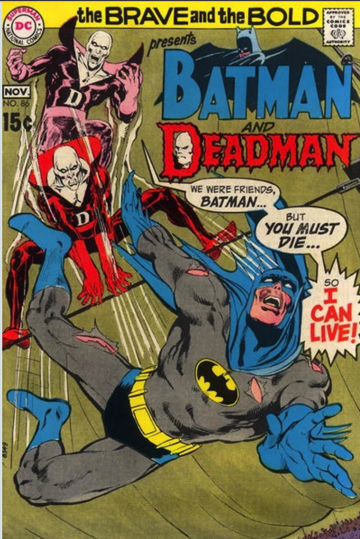
As for myself, the two back issues that I definitely bought were Secret Origins #2 and Brave & Bold #86, along with 20 or 30 back issues of Batman, Detective and World's Finest. My focus in those days was on building out my collection of Batman titles back to 1959, the year of my birth and the year that T&P started importing DC comics into the UK. What a coincidence!

©DC. Brave & Bold #86

©DC. Secret Origins #2

It was a great start to a Bank Holiday weekend fifty years ago. I think I'll track down those comics and re-read them. Happy Days!

Thursday, May 23, 2024

Kojak in Comics by Ian Baker

© Universal / Peter Pan records. Who drew this? Neal Adams? Crusty Bunkers?
In the previous blog, we discussed the prevalence of the TV Tie-In paperback in the UK in the 1970s. Now lets take a closer look at how comics attempted to capitalise on the success of 1970s TV Cop sensation Kojak on the printed page.

First, to refresh your memory on the pop-cultural rise and fall of the lollipop-sucking police lieutenant from the NYPD portrayed by Telly Savalas, the show’s pilot premiered in the US on Mar 8th 1973, and its final episode first-run showing was five years later on Mar 18th 1978.

The UK was late to latching on to the Kojak phenomenon , and it wasn’t until 23 Aug 1974 - almost 18 months after the US debut - that BBC-1 premiered the pilot film - The Marcus-Nelson Murders. The BBC knew they had a hit on their hands, and quickly ran through the episodes of Season One in a totally haphazard sequence, even flowing right into episodes of Season Two before they exhausted episodes from Season One (with the exception of the never-UK-broadcast banned episode “Therapy in Dynamite”).


Back in the US, Universal Television had quickly negotiated with writer Victor B Miller to pen what would turn out to be a series of nine TV-Tie-In paperbacks, which were published in the period Sep 1st 1974 - Oct 1st 1975 in the States (see table at foot of article). These are very good episode adaptations, compelling stories written as a first person narrative by Kojak himself. 


Victor Miller, as per his website , was initially approached by Bernard Shircliff of Pocket Books to novelize three Kojak episodes from Television. He was paid $2700 to adapt the first three scripts, going on to write a total of nine adaptations. These are very readable books. Miller is no hack, has a great ear for dialogue and narrative drive, and successfully went on to write his own novels and screenplays.


Kojak was a tough, gritty show for its time, and Universal Studios had no expectations of licensing a comic book adaptation. Police comics had gone out of fashion in the US in the 1950s. 


Police Comics in the 1950s


Marvel’s Police Action had run for only seven issues in 1954 ; Quality’s Police Comics had finished its 127-issue run in 1952.  Avon published Police Line-Up for 4 issues from 1951-1952, following it up with four issues of Sensational Police Cases from 1952-1954 for thirteen issues.


Mr District Attorney ran at DC from 1948-1959 for 67 issues, surviving latterly on mysteries linked to Aliens and Invisible criminals, avoiding tough gritty storylines which might fall foul of the Comics Code Authority. Similarly, Gangbusters ran at DC from 1947 to 1958 for 67 issues, but had limped to a halt with fanciful stories about robots, frogmen, human cannonball criminals, and alligators.


From an early TV Tie-In perspective, the famous TV series Dragnet had been represented in a daily newspaper comic strip distributed by the Los Angeles Mirror Syndicate from June 23, 1952 to May 21, 1955, but that finished well before the end of that series, which had continued on television in the US until 1959.


One exception to the continued popularity of police comics based on TV properties was Dell's Car 54, Where Are You?, which had a mildly successful run for a year in 1962. Of course, the mild comedy of Car 54 was a world away from Kojak and the NYPD.


A decade later, DC dipped their toes in the water with their publication of DC Special #10 titled "STOP! You Can't Beat The Law!", hitting US stands in November 1970 with a series of early 1950s reprints from Gangbusters, but reader response was tepid despite a fabulous cover by Nick Cardy.


 So by early 1973, the received wisdom was “Police Comics Do Not Sell!”


However, by the beginning of 1975, Pocket books had published six of Victor Miller's Kojak novelizations to strong sales. Martin Goodman at the newly formed Atlas Comics had taken notice, and felt that his new Atlas Comics line could tap into this public obsession for cop shows. And so Atlas Comics released the only 1970s US comic book with “Police” in the title in Feb 1975, called “Police Action with LOMAX NYPD”, which ran for only three issues, and folded with the rest of the Atlas line that Summer.


With the success of Kojak on TV in the UK (and with an eye on World Distributors’ UK success with publishing paperbacks of TV Private Detective Frank Cannon), Star Books (an imprint of W.H. Allen) kicked off UK publication of some of Miller’s Kojak novelizations, starting with book #2 “Requiem for a Cop” in August 1975, following up with “Girl In The River” (book #3) in September 1975. The first book had sold 100,000 copies in the UK, and by the time that the third book “Marked For Murder”
  (a retitled version of US book #5  “Death is Not A Passing Grade”) was published in December 1975, 165,000 copies had been sold. 


Kojak was a popular mass-market paperback phenomenon in the UK at a time when most mass market paperback series success stories involved soft porn in the vein of Timothy Lea’s “Confessions Of…” series. 


By 1976, Kojak’s star was starting to wane. The publication of the US paperbacks by Victor Miller had ended in Oct 1975, but Star persevered in the UK printing a few more books into 1976.


Kojak had started its 4th season in October 1976 on BBC-1 in the UK, now in lockstep with US transmission dates . Public enthusiasm was waning, and the show was routinely moved to a late time slot in the UK.


Counter-intuitively, publishers Stafford Pemberton of Knutsford, Cheshire, jumped in to the market with a 1977 hardback children’s Kojak Annual for Christmas 1976.  The book was a mix of illustrated text stories  and comic strips. I assume that they picked up licenses cheaply now that the show was in decline ; it was certainly no longer dominating pop culture in the UK.


Jon Davis artwork
The strips in the Annual were drawn by artist Jon Davis (1928-2020),  aka John Fox. Most of his previous output had been for licensed titles made in cooperation with Gerry and Sylvia Anderson's TV production company Century 21.  In the girls' title Lady Penelope, he illustrated 'The Angels', a spin-off of 'Captain Scarlet and the Mysterons', but also the non-Anderson feature 'Daktari'. He was also present in Joe 90: Top Secret (1969) and TV21 with 'The Champions' and 'Secret Agent 21'. In the 1970s, he continued his Anderson-related work at Polystyle Publications, drawing 'Joe 90' and episodes of 'UFO', 'Thunderbirds', and 'The Secret Service' for Countdown (1971-1973).   (Per lambiek.net)


In parallel in 1977,  there was a single attempt at a Kojak comic strip in the US as an adjunct to a Kojak book and record set of two original Kojak stories played by session voice actors. (Peter Pan Records #BR 518 "Five Star Final' & 'A Question of Honor'). The strip was drawn by Alan Kupperberg according to GCD, claiming that Neal Adams did the album cover. Peering at the cover at the top of this blog, I think I see more of Dick Giordano’s work, so perhaps it was a Crusty Bunkers collaboration.  The script was by David Dann.


Artwork Alan Kupperberg?


Over in the UK, the 1977 Kojak Annual was deemed a success. Remember that children’s Annuals were typically purchased by doting aunts for their nephews and nieces, not generally bought by the recipient. And so Stafford Pemberton followed up at Christmas 1977 with a follow-on Kojak Annual for 1978.


Artwork Jon Davis
Sales were nowhere near as good.By March 1978, the TV series was cancelled in the US, and would finish its run in the UK in a few months by August. Yet Kojak's appearances in comics was not yet done. 


Polystyle Publications was looking for licensable characters for its new TV-oriented comic strip weekly Target. They acquired the rights to Kojak, and the strip appeared in  Target Issue 1 cover dated 14th April 1978, a month after the show’s US cancellation. When Target was amalgamated with TV Comic, the strip continued in August 1978, ending its run with issue #1408 on 24th Nov 78.


Jon Davis had initially continued to draw the strip in Target, at some point handing over the reins to David Lloyd of subsequent V for Vendetta fame to close out the strip. (per Down the tubes).


A typical Kojak Strip from TV Comic
A total of 64 pages of black and white artwork was drawn during this period.


Reading the strips, they are a strange curio of rambling narrative interspersed with violent action. Jon Davis’ artwork is serviceable ; David Lloyd’s art contains hints of the masterly work for Warrior and DC a few years later.


There is a similar story linked to publication of Cannon TV tie-ins which resulted in a comic strip in Target also.


For those of you further interested in US TV Tie-In’s I recommend TV Tie-Ins by Kurt Peer, which purports to list every US-published TV tie-in. It’s a good reference book, although by excluding books published only in the UK, it only tells part of the TV Tie-In story. 


Table of Kojak TV Tie-Ins


Saturday, April 20, 2024

Woolworth's and Cheap Paperbacks in the 1970s


Do you remember when Woolie’s used to be the place to go for cheap paperbacks? At a time in the mid 1970s when new paperbacks cost on the region of 30p, cheap paperbacks in Woolworth’s were as little as 9p each, frequently piled high in a jumble, presumably set out by the same store associate who managed the "pick’n’mix" sweet displays. 

The books on sale were generally second-tier publisher American mass-market paperbacks rather than British-published  paperbacks (distinguishable at that time by the former’s coarser paper and less flexible spines), and had obscure publisher names like Award, Star or Tempo. In many cases the edges of the pages were coloured red,or green, or yellow, presumably to help the books stand out in US paperback spinner racks. I assume that Thorpe & Porter or World Distributors were importing these books from the States, in parallel with their imports of comics.


My earliest purchase in this sub-genre was a reprint of the Shadow pulp reprint “Grove of Doom” by Walter Gibson, writing as Maxwell Grant. Tempo had actually published “Grove of Doom” in 1969, but it did not appear in Portsmouth’s main Woolworth until 1972. It was a one-off, presumably inspired by the success of the Bantam Doc Savage reprints, and the Shadow novels published by Belmont in the mid 1960s.


This purchase was quickly followed by some crime stories by pulp era stalwart Frank Gruber (The Laughing Jackass ; Market for Murder),  Belmont/Flamingo reprinting some of his earlier novels from the 1940s. I believe that these were published in 1973. I'm sure the copies I bought were marked down significantly from their 25p cover price.


Although initially these books plundered the pulp back catalogs of Street & Smith and their brethren, by 1974 a major focus of these cheap books quickly became the TV tie-in, along with film tie-ins to certain genre films (Westerns, Crime, Sci-Fi) where a script novelization could be easily commissioned to a good, even well-known, writer in need of a few extra dollars(or quid) to keep the lights on while they labored on their own more respected literary projects.


Of course, there had been earlier tie-in paperbacks sold in the UK in the late 1960s -  the Man From Uncle books published by 4-Square come to mind, as do The Avengers (Steed and Mrs Peel) paperbacks by Panther - but those were full-price, well produced fare which carried a sheen of respectability - unlike the cheap mass-market imports from the States.


These books had latched on to popular culture, and were not going to let it go.


In the days before home video recorders (which started to emerge in the UK around 1976, but did not really go mainstream until 1980) the TV tie-in book was the only way to get a personal copy of your favourite show or film, apart from an audio recording. The appearance of the innovative, but short-lived   “Fotonovel” from Bantam on UK bookshelves in the last week of January 1978 (when Star Trek’s City on The Edge of Forever was published as a series of 300 photos with speech bubbles) marked the beginning of the end of the peak TV tie-in era.


So for a glorious 5 years I avidly sought out these imported gems in parallel to my comic collecting. Looking through past issues of our fanzine SuperStuff, I can relive my interest.


The new book report in SuperStuff #3 (1974-08-11) highlighted the series of books based on the "Mystery Movie" series McCloud and Hec Ramsey. In addition, a reprinting of Beneath The Planet of the Apes by Michael Avallone had just arrived from Bantam. [This book was a must-have for UK “Apes” enthusiasts, as the film itself had been classified “AA” at the cinema, making it unavailable to those of us younger than 14.]


SuperStuff #5 (1975-08-18) reported that I was on the lookout for a copy of Cannon - The Golden Bullet, by Paul Denver. Already five books had been published in that series.


The UK Public’s obsession with the TV cop show in the 1970s, particularly Cannon and Kojak, resulted in nine Kojak books written by Victor Miller and at least nine Cannon books, many of which were written specifically for the UK market by Douglas Enefer writing as Paul Denver, and printed/published first by World Distributors in a look and feel that mirrored US mass-market paperback conventions.


The Cannon books were all original stories, and more books were published in the UK than in the US. Contrastingly, the Kojak books were episode adaptations mostly from Season 1. Only five of the nine books written by Victor Miller were published in the UK. One of note that was omitted for UK publication was Therapy In Dynamite, the novelisation of the BBC-banned episode of Kojak. Incidentally, that episode has never been broadcast by the BBC, even during the repeat run in later years.

UK Edition retitled the novelisation of "Death Is Not A Passing Grade"


Of the film tie-ins by cheap paperbacks, most prominent to me were the adaptations of the Apes movies by likes of Jerry Pournelle, Larry Niven and David Gerrold. George Alex Effinger wrote four POTA TV tie-ins.


Joe Millard cornered the Western market with his adaptations of Clint Eastwood’s “Dollar” westerns and followed up with a number of new novels about the Man with No Name.


I’m currently re-acquiring old copies of many of these books, primarily for the nostalgia value. They were very much a feature of the Bronze Age for me….an cool adjunct to it, at least, when cheap publishing reflected popular culture, only to be replaced as the emergence of new technology made the demand obsolete.


I find it interesting that despite the popular success of these paperbacks in the US, that there were no associated comic strips produced in the United States. It was left to the UK to bring the TV cops to the comic page.  We'll dive into that in more detail next time.


© Ian Baker

Monday, April 1, 2024

Favourite Artists: Darwyn Cooke - Six Pack Stories & The Adventures of Dutch Courage


I’m a great admirer of the work of Darwyn Cooke and I believe that I own most examples of his comic book work, as well as the various hardback adaptations he did of Richard Stark’s anti-hero Parker. I love the way that he would adapt different styles to the material at hand - sometimes cartoony, at other times a pastiche of 1950s styles in the vein of Jim Mooney, and sometimes a more painterly approach.  I’m not aware of another American mainstream comic book artist who consciously varies his or her style to suit the material to the same extent.


I first came to appreciate Darwyn's work in DC's The New Frontier, and then avidly tracked down everything of his that I could find. One of my most prized possessions is The Adventures of Dutch Courage.


The Adventures of Dutch Courage is a 10-panel comic strip, drawn by Darwyn and written by Jimmy Palmiotti, published as custom labels on the bottles of session ale (brewed with juniper berries and lemon peel) for Arcade Brewery in Chicago a decade ago.  I've consumed four of the six bottles, but two bottles remain unopened.


The Adventures of Dutch Courage was only available on 18th November 2015 at four locations in Chicago ; The Beer Temple, Capones Liquor, Prestige Liquors (Westmont), and Binny’s (Lincoln Park). Luckily my eldest son was living close to Lincoln Park that year, and was able to secure me a six-pack.


At the time Darwyn was quoted “If you stop and think about all the beer Jimmy and I have consumed over the years, it’s about time we did something like this.”


Line 'em up!


Panel from Bottle #1

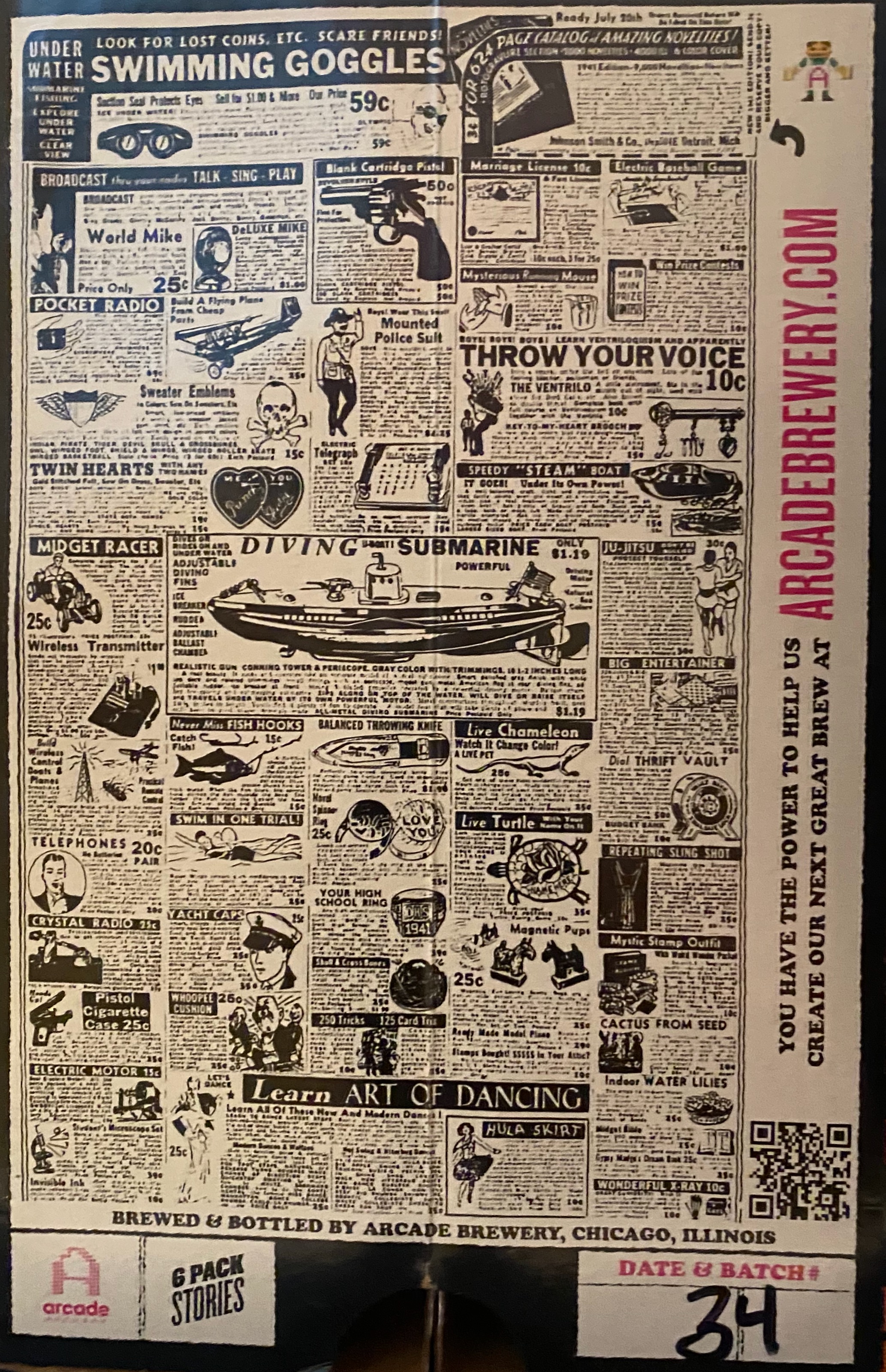
The six-pack packaging even has a bonus ad-page on the bottom of the carton.


Since Darwyn left us in 2016, I’ve looked for other artists that evince that same cartoony style imbued with humour and love for the material. David Aja and Jorge Fornes are good alternatives to Darwyn's "50s" style but Elsa Charretier is by far the closest in terms of being able to evoke Darwyn's cartoony style, humour and love of the medium. It is interesting that these three individuals I've noted are either Spanish or French, bringing European comic influences to a North American art form.


I've included a Wonder Woman piece by Elsa Charretier below.

© DC. Artwork by Elsa Charretier.

 ----------- Update as of April 2nd 2024-----------

Here are all six labels of the Dutch Courage adventure. Labels 2 to 6 are scanned from the bottles rolling them on my scanner - it is the best I can do without removing the labels from the bottles!