Saturday, May 25, 2024

Happy Emsworth Comic Con 50th Anniversary!!


 It was exactly fifty years ago today that fellow SuperStuff scribe Nigel Brown and I (along with Nigel's younger brother) attended our first Comic Con on 25th May 1974, organized by local fan Paul Rose. Fifty years has slipped by in the blink of an eye. It was a lovely day, and the mart was held at the Boy's Club, Emsworth, a small town to the east of Portsmouth. The Boy's Club was built on Coldharbour Farm, but a quick look at Google Street View shows that the venue has long gone, to be replaced by modern housing.

The story of the con has been related elsewhere in this blog, but thinking of it today brings back memories of a sunny spring day, and the excitement of a short train journey taking us away from our parents to a place with boxes and boxes of comics.

I asked Nigel what he remembered buying:

"So it was 50 years ago today I bought Action 212 cover dated Jan 56 off a well known dealer. Pretty much mint for £2 (can't remember what I sold it for, or when!)"

©DC Action Comics #212

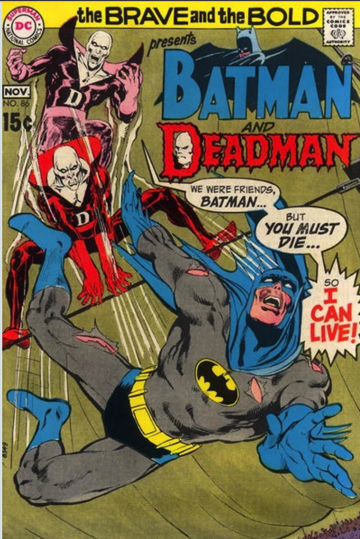
As for myself, the two back issues that I definitely bought were Secret Origins #2 and Brave & Bold #86, along with 20 or 30 back issues of Batman, Detective and World's Finest. My focus in those days was on building out my collection of Batman titles back to 1959, the year of my birth and the year that T&P started importing DC comics into the UK. What a coincidence!

©DC. Brave & Bold #86

©DC. Secret Origins #2

It was a great start to a Bank Holiday weekend fifty years ago. I think I'll track down those comics and re-read them. Happy Days!

Thursday, May 23, 2024

Kojak in Comics by Ian Baker

© Universal / Peter Pan records. Who drew this? Neal Adams? Crusty Bunkers?
In the previous blog, we discussed the prevalence of the TV Tie-In paperback in the UK in the 1970s. Now lets take a closer look at how comics attempted to capitalise on the success of 1970s TV Cop sensation Kojak on the printed page.

First, to refresh your memory on the pop-cultural rise and fall of the lollipop-sucking police lieutenant from the NYPD portrayed by Telly Savalas, the show’s pilot premiered in the US on Mar 8th 1973, and its final episode first-run showing was five years later on Mar 18th 1978.

The UK was late to latching on to the Kojak phenomenon , and it wasn’t until 23 Aug 1974 - almost 18 months after the US debut - that BBC-1 premiered the pilot film - The Marcus-Nelson Murders. The BBC knew they had a hit on their hands, and quickly ran through the episodes of Season One in a totally haphazard sequence, even flowing right into episodes of Season Two before they exhausted episodes from Season One (with the exception of the never-UK-broadcast banned episode “Therapy in Dynamite”).


Back in the US, Universal Television had quickly negotiated with writer Victor B Miller to pen what would turn out to be a series of nine TV-Tie-In paperbacks, which were published in the period Sep 1st 1974 - Oct 1st 1975 in the States (see table at foot of article). These are very good episode adaptations, compelling stories written as a first person narrative by Kojak himself. 


Victor Miller, as per his website , was initially approached by Bernard Shircliff of Pocket Books to novelize three Kojak episodes from Television. He was paid $2700 to adapt the first three scripts, going on to write a total of nine adaptations. These are very readable books. Miller is no hack, has a great ear for dialogue and narrative drive, and successfully went on to write his own novels and screenplays.


Kojak was a tough, gritty show for its time, and Universal Studios had no expectations of licensing a comic book adaptation. Police comics had gone out of fashion in the US in the 1950s. 


Police Comics in the 1950s


Marvel’s Police Action had run for only seven issues in 1954 ; Quality’s Police Comics had finished its 127-issue run in 1952.  Avon published Police Line-Up for 4 issues from 1951-1952, following it up with four issues of Sensational Police Cases from 1952-1954 for thirteen issues.


Mr District Attorney ran at DC from 1948-1959 for 67 issues, surviving latterly on mysteries linked to Aliens and Invisible criminals, avoiding tough gritty storylines which might fall foul of the Comics Code Authority. Similarly, Gangbusters ran at DC from 1947 to 1958 for 67 issues, but had limped to a halt with fanciful stories about robots, frogmen, human cannonball criminals, and alligators.


From an early TV Tie-In perspective, the famous TV series Dragnet had been represented in a daily newspaper comic strip distributed by the Los Angeles Mirror Syndicate from June 23, 1952 to May 21, 1955, but that finished well before the end of that series, which had continued on television in the US until 1959.


One exception to the continued popularity of police comics based on TV properties was Dell's Car 54, Where Are You?, which had a mildly successful run for a year in 1962. Of course, the mild comedy of Car 54 was a world away from Kojak and the NYPD.


A decade later, DC dipped their toes in the water with their publication of DC Special #10 titled "STOP! You Can't Beat The Law!", hitting US stands in November 1970 with a series of early 1950s reprints from Gangbusters, but reader response was tepid despite a fabulous cover by Nick Cardy.


 So by early 1973, the received wisdom was “Police Comics Do Not Sell!”


However, by the beginning of 1975, Pocket books had published six of Victor Miller's Kojak novelizations to strong sales. Martin Goodman at the newly formed Atlas Comics had taken notice, and felt that his new Atlas Comics line could tap into this public obsession for cop shows. And so Atlas Comics released the only 1970s US comic book with “Police” in the title in Feb 1975, called “Police Action with LOMAX NYPD”, which ran for only three issues, and folded with the rest of the Atlas line that Summer.


With the success of Kojak on TV in the UK (and with an eye on World Distributors’ UK success with publishing paperbacks of TV Private Detective Frank Cannon), Star Books (an imprint of W.H. Allen) kicked off UK publication of some of Miller’s Kojak novelizations, starting with book #2 “Requiem for a Cop” in August 1975, following up with “Girl In The River” (book #3) in September 1975. The first book had sold 100,000 copies in the UK, and by the time that the third book “Marked For Murder”
  (a retitled version of US book #5  “Death is Not A Passing Grade”) was published in December 1975, 165,000 copies had been sold. 


Kojak was a popular mass-market paperback phenomenon in the UK at a time when most mass market paperback series success stories involved soft porn in the vein of Timothy Lea’s “Confessions Of…” series. 


By 1976, Kojak’s star was starting to wane. The publication of the US paperbacks by Victor Miller had ended in Oct 1975, but Star persevered in the UK printing a few more books into 1976.


Kojak had started its 4th season in October 1976 on BBC-1 in the UK, now in lockstep with US transmission dates . Public enthusiasm was waning, and the show was routinely moved to a late time slot in the UK.


Counter-intuitively, publishers Stafford Pemberton of Knutsford, Cheshire, jumped in to the market with a 1977 hardback children’s Kojak Annual for Christmas 1976.  The book was a mix of illustrated text stories  and comic strips. I assume that they picked up licenses cheaply now that the show was in decline ; it was certainly no longer dominating pop culture in the UK.


Jon Davis artwork
The strips in the Annual were drawn by artist Jon Davis (1928-2020),  aka John Fox. Most of his previous output had been for licensed titles made in cooperation with Gerry and Sylvia Anderson's TV production company Century 21.  In the girls' title Lady Penelope, he illustrated 'The Angels', a spin-off of 'Captain Scarlet and the Mysterons', but also the non-Anderson feature 'Daktari'. He was also present in Joe 90: Top Secret (1969) and TV21 with 'The Champions' and 'Secret Agent 21'. In the 1970s, he continued his Anderson-related work at Polystyle Publications, drawing 'Joe 90' and episodes of 'UFO', 'Thunderbirds', and 'The Secret Service' for Countdown (1971-1973).   (Per lambiek.net)


In parallel in 1977,  there was a single attempt at a Kojak comic strip in the US as an adjunct to a Kojak book and record set of two original Kojak stories played by session voice actors. (Peter Pan Records #BR 518 "Five Star Final' & 'A Question of Honor'). The strip was drawn by Alan Kupperberg according to GCD, claiming that Neal Adams did the album cover. Peering at the cover at the top of this blog, I think I see more of Dick Giordano’s work, so perhaps it was a Crusty Bunkers collaboration.  The script was by David Dann.


Artwork Alan Kupperberg?


Over in the UK, the 1977 Kojak Annual was deemed a success. Remember that children’s Annuals were typically purchased by doting aunts for their nephews and nieces, not generally bought by the recipient. And so Stafford Pemberton followed up at Christmas 1977 with a follow-on Kojak Annual for 1978.


Artwork Jon Davis
Sales were nowhere near as good.By March 1978, the TV series was cancelled in the US, and would finish its run in the UK in a few months by August. Yet Kojak's appearances in comics was not yet done. 


Polystyle Publications was looking for licensable characters for its new TV-oriented comic strip weekly Target. They acquired the rights to Kojak, and the strip appeared in  Target Issue 1 cover dated 14th April 1978, a month after the show’s US cancellation. When Target was amalgamated with TV Comic, the strip continued in August 1978, ending its run with issue #1408 on 24th Nov 78.


Jon Davis had initially continued to draw the strip in Target, at some point handing over the reins to David Lloyd of subsequent V for Vendetta fame to close out the strip. (per Down the tubes).


A typical Kojak Strip from TV Comic
A total of 64 pages of black and white artwork was drawn during this period.


Reading the strips, they are a strange curio of rambling narrative interspersed with violent action. Jon Davis’ artwork is serviceable ; David Lloyd’s art contains hints of the masterly work for Warrior and DC a few years later.


There is a similar story linked to publication of Cannon TV tie-ins which resulted in a comic strip in Target also.


For those of you further interested in US TV Tie-In’s I recommend TV Tie-Ins by Kurt Peer, which purports to list every US-published TV tie-in. It’s a good reference book, although by excluding books published only in the UK, it only tells part of the TV Tie-In story. 


Table of Kojak TV Tie-Ins


Saturday, April 20, 2024

Woolworth's and Cheap Paperbacks in the 1970s


Do you remember when Woolie’s used to be the place to go for cheap paperbacks? At a time in the mid 1970s when new paperbacks cost on the region of 30p, cheap paperbacks in Woolworth’s were as little as 9p each, frequently piled high in a jumble, presumably set out by the same store associate who managed the "pick’n’mix" sweet displays. 

The books on sale were generally second-tier publisher American mass-market paperbacks rather than British-published  paperbacks (distinguishable at that time by the former’s coarser paper and less flexible spines), and had obscure publisher names like Award, Star or Tempo. In many cases the edges of the pages were coloured red,or green, or yellow, presumably to help the books stand out in US paperback spinner racks. I assume that Thorpe & Porter or World Distributors were importing these books from the States, in parallel with their imports of comics.


My earliest purchase in this sub-genre was a reprint of the Shadow pulp reprint “Grove of Doom” by Walter Gibson, writing as Maxwell Grant. Tempo had actually published “Grove of Doom” in 1969, but it did not appear in Portsmouth’s main Woolworth until 1972. It was a one-off, presumably inspired by the success of the Bantam Doc Savage reprints, and the Shadow novels published by Belmont in the mid 1960s.


This purchase was quickly followed by some crime stories by pulp era stalwart Frank Gruber (The Laughing Jackass ; Market for Murder),  Belmont/Flamingo reprinting some of his earlier novels from the 1940s. I believe that these were published in 1973. I'm sure the copies I bought were marked down significantly from their 25p cover price.


Although initially these books plundered the pulp back catalogs of Street & Smith and their brethren, by 1974 a major focus of these cheap books quickly became the TV tie-in, along with film tie-ins to certain genre films (Westerns, Crime, Sci-Fi) where a script novelization could be easily commissioned to a good, even well-known, writer in need of a few extra dollars(or quid) to keep the lights on while they labored on their own more respected literary projects.


Of course, there had been earlier tie-in paperbacks sold in the UK in the late 1960s -  the Man From Uncle books published by 4-Square come to mind, as do The Avengers (Steed and Mrs Peel) paperbacks by Panther - but those were full-price, well produced fare which carried a sheen of respectability - unlike the cheap mass-market imports from the States.


These books had latched on to popular culture, and were not going to let it go.


In the days before home video recorders (which started to emerge in the UK around 1976, but did not really go mainstream until 1980) the TV tie-in book was the only way to get a personal copy of your favourite show or film, apart from an audio recording. The appearance of the innovative, but short-lived   “Fotonovel” from Bantam on UK bookshelves in the last week of January 1978 (when Star Trek’s City on The Edge of Forever was published as a series of 300 photos with speech bubbles) marked the beginning of the end of the peak TV tie-in era.


So for a glorious 5 years I avidly sought out these imported gems in parallel to my comic collecting. Looking through past issues of our fanzine SuperStuff, I can relive my interest.


The new book report in SuperStuff #3 (1974-08-11) highlighted the series of books based on the "Mystery Movie" series McCloud and Hec Ramsey. In addition, a reprinting of Beneath The Planet of the Apes by Michael Avallone had just arrived from Bantam. [This book was a must-have for UK “Apes” enthusiasts, as the film itself had been classified “AA” at the cinema, making it unavailable to those of us younger than 14.]


SuperStuff #5 (1975-08-18) reported that I was on the lookout for a copy of Cannon - The Golden Bullet, by Paul Denver. Already five books had been published in that series.


The UK Public’s obsession with the TV cop show in the 1970s, particularly Cannon and Kojak, resulted in nine Kojak books written by Victor Miller and at least nine Cannon books, many of which were written specifically for the UK market by Douglas Enefer writing as Paul Denver, and printed/published first by World Distributors in a look and feel that mirrored US mass-market paperback conventions.


The Cannon books were all original stories, and more books were published in the UK than in the US. Contrastingly, the Kojak books were episode adaptations mostly from Season 1. Only five of the nine books written by Victor Miller were published in the UK. One of note that was omitted for UK publication was Therapy In Dynamite, the novelisation of the BBC-banned episode of Kojak. Incidentally, that episode has never been broadcast by the BBC, even during the repeat run in later years.

UK Edition retitled the novelisation of "Death Is Not A Passing Grade"


Of the film tie-ins by cheap paperbacks, most prominent to me were the adaptations of the Apes movies by likes of Jerry Pournelle, Larry Niven and David Gerrold. George Alex Effinger wrote four POTA TV tie-ins.


Joe Millard cornered the Western market with his adaptations of Clint Eastwood’s “Dollar” westerns and followed up with a number of new novels about the Man with No Name.


I’m currently re-acquiring old copies of many of these books, primarily for the nostalgia value. They were very much a feature of the Bronze Age for me….an cool adjunct to it, at least, when cheap publishing reflected popular culture, only to be replaced as the emergence of new technology made the demand obsolete.


I find it interesting that despite the popular success of these paperbacks in the US, that there were no associated comic strips produced in the United States. It was left to the UK to bring the TV cops to the comic page.  We'll dive into that in more detail next time.


© Ian Baker

Monday, April 1, 2024

Favourite Artists: Darwyn Cooke - Six Pack Stories & The Adventures of Dutch Courage


I’m a great admirer of the work of Darwyn Cooke and I believe that I own most examples of his comic book work, as well as the various hardback adaptations he did of Richard Stark’s anti-hero Parker. I love the way that he would adapt different styles to the material at hand - sometimes cartoony, at other times a pastiche of 1950s styles in the vein of Jim Mooney, and sometimes a more painterly approach.  I’m not aware of another American mainstream comic book artist who consciously varies his or her style to suit the material to the same extent.


I first came to appreciate Darwyn's work in DC's The New Frontier, and then avidly tracked down everything of his that I could find. One of my most prized possessions is The Adventures of Dutch Courage.


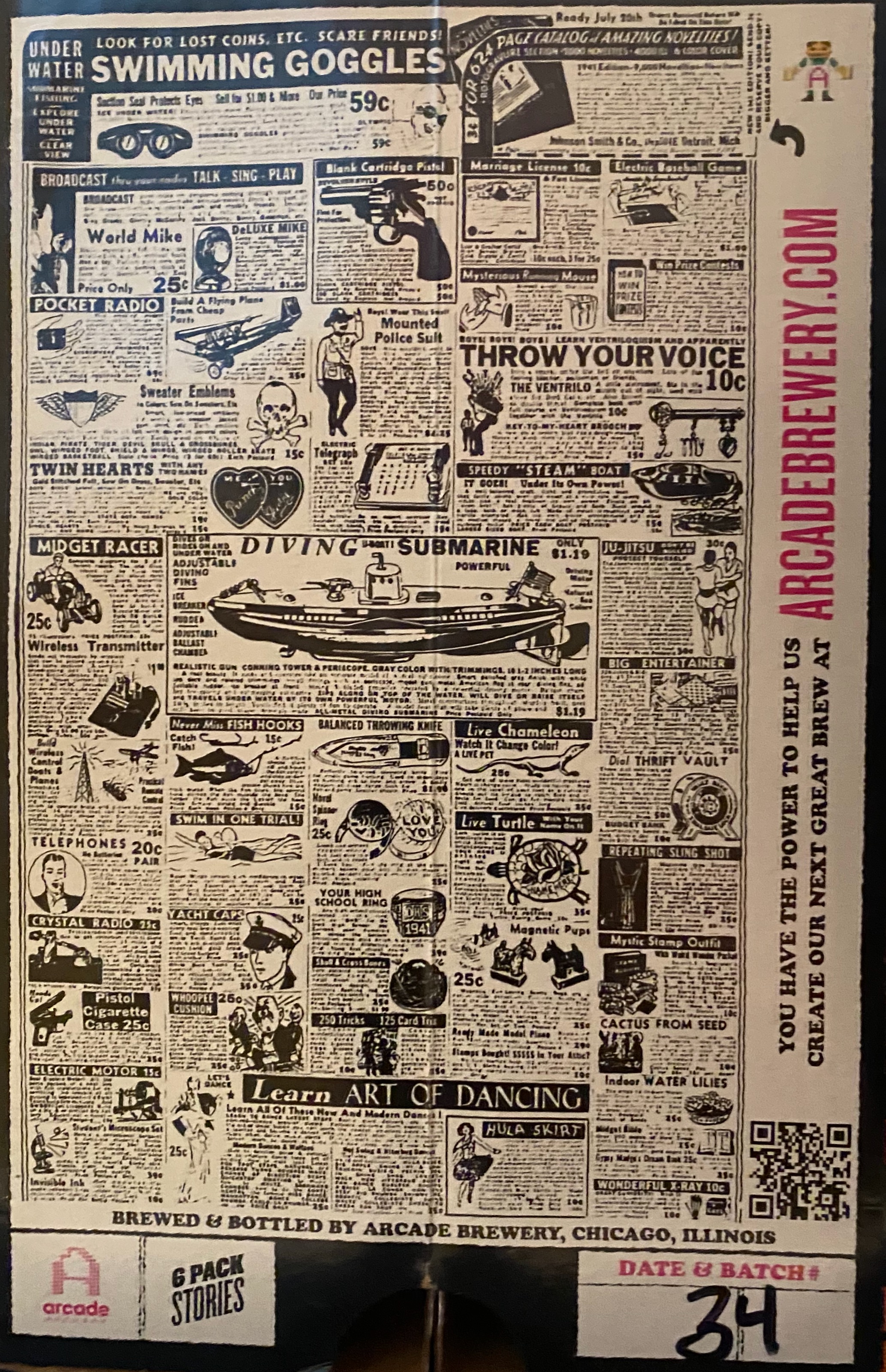
The Adventures of Dutch Courage is a 10-panel comic strip, drawn by Darwyn and written by Jimmy Palmiotti, published as custom labels on the bottles of session ale (brewed with juniper berries and lemon peel) for Arcade Brewery in Chicago a decade ago.  I've consumed four of the six bottles, but two bottles remain unopened.


The Adventures of Dutch Courage was only available on 18th November 2015 at four locations in Chicago ; The Beer Temple, Capones Liquor, Prestige Liquors (Westmont), and Binny’s (Lincoln Park). Luckily my eldest son was living close to Lincoln Park that year, and was able to secure me a six-pack.


At the time Darwyn was quoted “If you stop and think about all the beer Jimmy and I have consumed over the years, it’s about time we did something like this.”


Line 'em up!


Panel from Bottle #1

The six-pack packaging even has a bonus ad-page on the bottom of the carton.


Since Darwyn left us in 2016, I’ve looked for other artists that evince that same cartoony style imbued with humour and love for the material. David Aja and Jorge Fornes are good alternatives to Darwyn's "50s" style but Elsa Charretier is by far the closest in terms of being able to evoke Darwyn's cartoony style, humour and love of the medium. It is interesting that these three individuals I've noted are either Spanish or French, bringing European comic influences to a North American art form.


I've included a Wonder Woman piece by Elsa Charretier below.

© DC. Artwork by Elsa Charretier.

 ----------- Update as of April 2nd 2024-----------

Here are all six labels of the Dutch Courage adventure. Labels 2 to 6 are scanned from the bottles rolling them on my scanner - it is the best I can do without removing the labels from the bottles!


Saturday, March 16, 2024

Overlooked Gems - The Human Target - Action #425

One series I completely missed out on in 197? was the Human Target, a strip which started out as a back-up in Action Comics #423 and has run under the radar of most fans for the past fifty years, as the character has only intermittently appeared in comics and on TV.


I was not a collector of Superman or Action Comics in the 1970s, and so a particular gem of a story in Action #425 drawn by Neal Adams completely passed me by when it turned up on UK spinner racks at the end of June 1973. I had never read the story about the Human Target until last Sunday when I found a copy in a back-issue box for $6.


© DC. Action #425
Created by Len Wein and Carmine Infantino, the Human Target is man called Christopher Chance who places himself in harms’ way, impersonating his client to draw out and neutralize a suspected threat against the client. (There was an earlier Human Target, not to be confused with an earlier incarnation.)


© DC.

The story in Action #425 is actually a Part One of …”The Short-Walk-To-Disaster Contract”… , packed into 6 pages. I do wonder why Adams took up the challenge of drawing the story, interleaved between his partial completion of Amazing Adventures #18 and the legendary Batman #251 (The Joker’s Five Way Revenge), but the story is a visual Masterclass in getting the full narrative into as few panels as possible. Take a look at page 2 where Adams manages to compress three pages worth of story into one page by having images and dialogue flow as the reader's eye tracks the action.


© DC.

Reader response in the lettercol of #429 was very positive. Debbie Hetherington of Wallaceburg, Ontario was typical in her fullsome praise.


Unfortunately, the readers' enthusiasm for awaiting Adams to draw the concluding  part of the story was not rewarded. Dick Giordano pencilled and inked the conclusion to the story solo in Action #426. No explanation was given for Adams’ absence in the lettercol of #430. 


This was the only time Adams drew The Human Target. For Adams fans this is an issue worth seeking out.


For Human Target fans, I also very highly recommend the recent 12-part Human Target series by Tom King and Greg Smallwood, which contains stellar art on a stellar story published under the DC Black Label imprint.


© DC Black Label
The Human Target has all the attributes for a great episodic TV series. There have been a couple of attempts in the past. The most recent incarnation was back in 2010-2011. I’ve picked up a copy of Season One blu-ray of the Fox TV series from 2011, which is pretty good. Season Two can be found on Dailymotion, but you’ll need to download it and flip the image L-R to see it in a decent format.