Showing posts with label portsmouth. Show all posts

Friday, December 30, 2022

Searching for comics in Portsmouth, 1970s style - Part Five

 By Ian Baker and Nigel Brown


© Google Maps. The final sections of the route

Do you remember when collecting comics was all about the content, not the condition of the book? Just getting a new story was satisfaction enough, and second-hand shops were the place in the early seventies to find those gems from the days of early Marvels and Silver Age DCs. I was reminded of that experience earlier this week when I visited my local Half-Price books and saw decent copies of  FF #73, FF #87 and FF #32 for sale at a combined total of $14!   You
can go home again!


The last four stops on this epic 5-part series recalling cycle-rides around Portsmouth in the early 1970s are all second-hand shops that figured large in our travels. They were further north on Portsea Island from Southsea, but that was nothing to teenage lads with Carlton Corsa racing bikes and school haversacks ready to carry the goods.


We take up our journey traveling north from Arundel Street (see previous episode) towards Buckland......


Stop #25 - Second-hand Shop just inside Church Rd, off St.John’s Road


Even St.John’s Road in that part of Portsmouth hasn’t survived the residential redevelopment since the 1970s. I think it was somewhere around where Glidden Close is today, just south of St.John’s Cathedral Catholic Primary School.


© Google. Area highlighted is where shop was located.

 
© DC. The actual GL/GA #76


©DC. Forever People #1


“It was a dreadful dump, mentioned in that article ‘Memories Are Made Of This’ by Dave Jackson in Comics Unlimited # 33. Demolished since then. That whole area’s been redeveloped a long time now, but in those days there were rows of terraced houses, and a small parade of shops. That was where I got a Forever People # 1, and a GL/GA #76 for 1p each. A few years later I showed the GL/GA to my friend Neil when he came round one day to see my comic collection. I offered it to him for £5. He really wanted it, but his mum wouldn’t pay out!” – Nigel 


Stop #26 - Second-hand Shop at the end of Lake Road, part of a small row, close to the corner opposite Constad Jewellers, near to St.Mary’s Church in Fratton


The route of Lake Road was re-aligned in the late 1970s, but in our comic collecting days it joined Kingston Road at the Tramway Arms. The second-hand shop was on the south side of the road, across Kingston Rd from Hampshire Street.


©DC. Flash #113 - a opportunity passed up

“I remember they had junk furniture sticking out into the street. The place never looked very promising but once – significantly – they had a small collection of very early 1960s Flash comics for sale that I hadn’t seen elsewhere (and not again until at the London comic marts). Issues like Flash # 113.” – Nigel 


Stop #27 - Gibbs – New Road, Fratton/Copnor boundary, between Burleigh Road and Langford Road


©Google. Row of shops where Gibbs used to be

“Another second-hand shop Geoff introduced us to. My memory is that it was run by a Mrs. Gibbs (“Ma Gibbs” as she was known locally in Copnor) who had books and magazines and comics in piles around the shop, frequently with one or more of her many cats sitting on the papers. The place smelled of cat, or cat food. 

The shop had a yellow front with one of those dog mannequins outside with a slot for donations for animal welfare. It has been said that once her bills were paid, Mrs Gibbs gave all the remainder to the RSPCA.

It did turn out to be a good place to get old Bantam Doc Savage paperbacks. I picked up copies of both Doc Savage paperbacks #14 and #22 there in April 1976.” – Ian


“This was an old favourite, and often reliable, run by an older lady, a slightly less caustic version of Ena Sharples, I always thought. The shop had a striking yellow frontage.” – Nigel 


Stop #28 - Second-hand Shop on corner of Knox Rd and Stamshaw Road, close to Angerstein Road
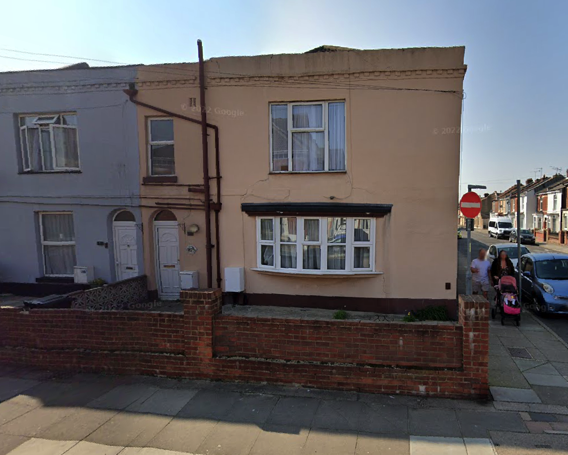

©Google. Location of 2nd hand shop corner of Knox Rd and Stamshaw Rd. Another residential conversion


©DC. Ian picked up a very scruffy version of Batman #213 - I think it was coverless.

©Marvel. Another gem picked up at Knox Rd - Ian's earliest Conan (at that time).


“We have Geoff (Cousins) to thank for identifying this shop. They had a pile of very early 60s comics, rough condition. Plus Doc Savage paperbacks. I remember getting an early Conan here (Conan #5). Also a very tatty copy of Batman Giant #213. My overriding memory  is that the place had a stale odour.” – Ian

“This shop was a bit of a cycle ride, up in North End. Perhaps it was the first time I went there, but I remember there were a particularly nice pile of American comics for sale. After that, I always anticipated a good haul of comics and most visits didn’t disappoint. The comics pile was along the side of the shop, close to the window. I recall the owner was a little dumpy lady, with short black hair.

“Once I passed on a Teen Titans comic because there was no number on the cover. It was Teen Titans #1.”  – Nigel


“I remember going to a shop on the corner of Knox Rd & Stamshaw Rd, buying D C & Marvel comics, return when read take back & swop with a penny to get another. Being a geek. Great .” Wayne Johnson from FB “Memories of Bygone Portsmouth”


Our knowledge of the North-East area of Portsmouth was mostly due to the familiarity our pal Geoff Cousins had of the area, having grown up in Copnor. And so our final stop - Stop #29 , if Geoff was accompanying us on our travels, was a corner newsagent in Tangier Rd, close to Geoff's Nan's house where a glass of orange squash might be waiting.


*****************************************


Nigel Brown writes:


About ten years after those halcyon days, my research for our fanzine SuperStuff No.11 (Aug.1984) took me back around the streets of Portsmouth and Southsea. I reported:


            ‘Of the second-hand shops we haunted, on a recent trip I was only able to find two that possibly had some comics for sale. In one, a shop, in Angerstein Road where they always had sixty to seventy comics in a pile in the corner, I was told, “I can’t get them for love nor money.” In the other, Gibb’s in New Road, I was shown a mangy pile of Charltons and a few badly damaged Marvels (last months, I think!). Oh yes, and a copy of Detective Comics No.426 (1972) that wasn’t even in good enough condition to buy at 6 pence. These were the only two second-hand shops, of the ones we used to visit that I could find at all! Some, like the old Book Exchange have been knocked down to make way for a rubbish tip, and some, like a smelly old place in Arundel street that was always good for 1960 to 1964 DCs have been boarded up and lie derelict.’

            By now, in 2022, charity shops have replaced those private enterprises in the ecosystem of the high street. In some cases, a second-hand shop’s position in a residential area has encouraged a re-conversion back into a residential dwelling (eg. The Book Exchange in Devonshire Avenue). 

            I think, too, that the move of American comics from the easily available newsstands into specialist direct-sale shops has cut off the supply of old comics to charity/second-hand shops. That, together with the now-common perception amongst the public that old comics are ‘worth money’, leading to preferred sales through eBay, or to comic dealers, means that even the charity shops are unlikely to stock old comics.


********************************************


Well, that about wraps up our memories of newsagents and second-hand shops in Portsmouth in the early to mid 1970s.  Interestingly, in all of our travels on the Comic Hunt I do not recall ever crossing paths with other collectors, which in retrospect seems strange on an island city of a quarter of a million people. Certainly there was enough comic content available to satisfy the demands of scores of teenage schoolboys. The letters pages of fanzine Fantasy Unlimited (later Comics Unlimited) revealed the names Dave Jackson and Bernard Smith as avid Portsmouth-based fans in those mid-70s days, who frequented the very same haunts, but we have yet to meet them. Hopefully some of them will see this blog entry and raise their heads above the parapet in the comments section below.


Of course, collecting comics in Portsmouth didn’t end then! Look out for the next in this series:


‘Beyond the Bronze Age (early 1980s to the present day)’


Friday, November 11, 2022

Searching for comics in Portsmouth, 1970s style - Part Four


[You can read the previous three parts of this blog reminiscence of cycling around Portsmouth in the early to mid-1970s in search of American comics, Part One here, Part Two here and Part Three here. - Ian (baggsey)]

© Google. Picking up the route.....
When we last left our heroes, we had just left a convenience store in the St Paul's Road area. Our next stop on the weekly comic hunt is at one of the most iconic buildings in Portsmouth - Charter House - built in the late 1800's, and still very much in use today.

The newsagents in question was...

Stop #18. W.H. Edwards, Charter House, Cambridge Rd.

© "honda1998rrw" - found on Flickr

© Google. Am pretty sure W.H. Edwards was where Mail Boxes is now


Although we stopped by here on our Saturday comic hunts in the early 70s, it really came into its own in the period 1975-76, when we would also make a weekly Friday visit during school lunch break on our walk from Portsmouth Grammar School in the old High Street up to W H Smiths in Commercial Rd to pick up a weekly copy of Look-In, which I got primarily for TV news of Bionic Woman, Six-Million Dollar Man and Batman, as well as the comic strips of The Tomorrow People (hoping to see the artwork of Mike Noble) and Six Million Dollar Man (drawn by Martin Astbury).


However, with every trip for Look-In, we stopped at W.H. Edwards in Charter House which was the prime hub for obtaining Marvel Black & White magazines in Portsmouth; the biggest selection and the most reliable source. 


"I'm pretty sure that I collected every Marvel B&W that was on offer, but the titles that stick in my mind are Doc Savage, Deadly Hands of Kung Fu, Unknown Worlds of Science Fiction and Savage Sword of Conan. I really gravitated towards the Marvel B&W magazines – I liked the whole concept of a magazine that incorporated interesting articles with a different style of artwork. One major gripe at the time was that the US Planet of the Apes magazine was unavailable on the spinner racks in the UK, to avoid competition with the UK Planet of the Apes weekly comic.


"I thought that the Doc Savage B&W magazine was the best rendition of Doc and his crew that I'd seen in a comic book, and the stories went some way towards capturing Doc's 'Apocalyptic Life" as Philip Jose Farmer coined it. The artwork by John Buscema and Tony de Zuniga was excellent and Doug Moench had obviously read Lester Dent's story outline Bible for the Doc pulps. If Buscema did not exactly capture the Doc in my mind's eye, it came pretty close. Ken Barr's art on the covers were closest to Bama that I'd seen on comic covers - I loved the whole package, but it only lasted 8 issues.” – Ian


© Marvel. Art by John Buscema and Tony de Zuniga

Unknown Worlds of Science Fiction # 5 (Sept. 1975) was a landmark issue for me as it featured an interview with one of my favourite SF writers, Larry Niven. At that time I had been hugely impressed by his collection ‘Neutron Star’.” - Nigel


© Marvel. Unknown Worlds of Science Fiction #5


"Deadly Hands of Kung Fu was also a must-buy - as much for the wonderful Neal Adams covers as the Shang-Chi stories within. So many great Adams covers to choose from, but #4 really sticks in my mind. I liked the way he drew Caine's face as a cross between David Carradine and Bruce Lee." - Ian


Stop #19. Convenience store, just inside College Street, on the Hard opposite the Harbour Station

The next stop on our route took us half a mile south-west to Portsmouth Harbour, to a small convenience store/newsagents, next to The Victory restaurant. The photo from Google shows the part of the building now painted grey - not much to look at - but a source of comics all the same, back in the mid 70s.

© Google street view

“This convenience store/newsagents became a semi regular haunt around May/June 1976, when they started stocking DCs at the point when T&P started re-distribution of old stock after a period of no imports. Each comic had been issued a “5p” price sticker to overlap the existing 10p T&P stamp, but in many cases the newsagent had peeled off the 5p sticker to reveal the old price instead.


The only comics I can recall buying here were House of Secrets issues that I had somehow missed. I had been a great DC House of Mystery fan, but expanded the collection to HoS somewhat later. I'm pretty sure that I picked up House of Secrets #139  (Berni Wrightson cover) with a rather disappointing spooky tale by Jack Oleck, illustrated by Steve Ditko, inked by Mike Royer. I suppose I was expecting a more Kirby-esque version of Ditko when inked by Royer, but it just seemed lacklustre ” - Ian


© DC. Cover by Berni Wrightson

©DC. Ditko drawn - Royer inked.
Stop #20. J.W. August. 65 Charlotte Street (on the corner of Charlotte Street and Meadow Street).

Cycling a mile from the Harbour towards Commercial Road brought us to Charlotte Street, the famed market street of Portsmouth, now long gone, subsumed by the Cascades shopping mall. But in the 60s and 70s.it was the hub of commerce. Half-way along Charlotte Street was newsagents J.W. August, which had achieved some notoriety as far back as 1952, involved in a case of selling unsuitable magazines. (See blog "American Comics in Austerity Britain") . But we knew none of this; as far as we were concerned it was a prime comics haunt.

J.W. August not long prior to demolition 

“[J.W. August was...] Where I first saw DC comics, with their distinctive checkerboard black and white top strip, on a Thorpe & Porter wire rack in 1966. It was the shop opposite my father’s market stall, so I was bound to see the comic rack eventually…


“I remember looking at the cover of World’s Finest # 160 in 1966, thinking ‘Who are these colourful characters swooping down to confront this villain?’ They were Superman, Batman and Robin.


“Soon after that, I acquired my first American comic, Superman # 190, and so for me this newsagent was where it all began! For a more detailed account, see SuperStuff previous post in July 2020: What’s in a name? Superman’s greatest enemy we don’t hear about. ” – Nigel


© DC. Nigel's first view of a DC comic.

Stop #21. A.F. Dines - barrow in Charlotte Street (on the corner of Charlotte St and Commercial Road)

The final stop in Charlotte St was at A.F. Dines' barrow, where recent back issues of UK magazines and comics could be had at reduced prices. Can anyone zoom in on the photo and definitely identify any of the magazines and comics on sale?
© Family of A.F. Dines

“Back in the late 60s I remember it had recent back issues of Smash, Pow, TV21 and Joe 90. Presumably the owner got remainder-returned comics from the wholesalers.” – Ian


Stops #22, #23, #24. Newsie outside General Post Office ; Post Office in Arundel Street ; 2nd hand shop in Arundel Street, close to Fratton Road

The memory gets hazy at this point, and we include these three stops for the sake of completeness. Our pal Geoff Cousins remembers clearly that there was a street newsie who used to sell newspapers and comics outside the General Post Office, opposite the Town Station (stop #22 in map). Stop #23 was the local Post Office in Arundel Street, where they stocked a few Marvels in the summer of 1975, and finally stop #24, which was probably the scruffiest second-hand shop in Pompey.

“I have a vague recollection of a comic shop there.” – Nigel


“I remember a scruffy shop on the South side of Arundel Street, half a dozen shops West of Fratton Road. My overriding memory is that it was smelly, very dark and uninviting -  intimidating, even” – Ian


[This about wraps it up for this blog. Only one more stage to go, as we subsequently head north to the wilds of Buckland and Stamshaw, and the two key second-hand shops for back issues.]

Tuesday, October 4, 2022

American comics in Austerity Britain

© Apologies to the cover designer of the superb Austerity Britain by David Kynaston

Being a fan of American comics in Portsmouth, UK in the 1950s must have been a lonely existence. Having been born in 1959 and grown up through the sixties and seventies, there was never a time in my childhood where a DC or Marvel book was not available within a mile of so of where I lived.

But that period prior to 1959 was a dark time. In fact, comics were just one of many non-essential items specifically banned from importation from the US since 1939 as a way of preserving the value of the pound and reducing funds going out of the country. During the war, Britain was increasingly dependent on the US as its main supplier of goods, and reducing that dependency in favour of home-grown product was the prime aim.


In addition to the financial considerations, there was major concern that printed matter entering the UK during the war could be used as a way of providing coded messages to fifth-columnists hiding among the general population. And so towns with ports receiving approved goods from America were a focus for additional scrutiny. An article in the 20th Nov 1957 edition of the Liverpool Echo detailed how during WWII the Aintree branch office of Gov Dept M.C.5. made a point of intercepting all American Comics coming in to the UK on American ships - whether as ballast or crew entertainment - and then painstakingly examining each physical copy in case there were coded messages hidden in the pages as pencil notations.


And so the only American comic material that legally found its way into the UK until the middle of 1959 when the law was changed, were British reprints using the plates of older American comics.


As Britain entered the 1950s, still in the grip of rationing, a review of both the national press and my local Portsmouth Evening News shows a very slowly emerging interest in American comics, but not in any positive form.


The only Portsmouth local to challenge Government policy was then thirty-year old Donald Gilbert T Cowd (1920-1985) who wrote to the editor of the Portsmouth Evening News on 12th April 1950:

© Portsmouth Evening News. 12th April 1950


There were no other reader responses to his letter, and so I suspect that Donald Cowd was a lone voice in the Hampshire wilderness.


Throughout the next decade I searched in vain for any further mentions of American comics in the Portsmouth Evening News. There were only TWO classified ads:


The first appeared on 4th June 1951:


WANTED. American Comics and Film Books.  161 Arundel Street


161 Arundel Street was the location of a second-hand shop run by a woman called Lily Darke. The shop was at the Commercial Rd end of Arundel Street.  The majority of her classified Wants ads over the years concerned the acquisition of Gents, Ladies and Children’s clothing, which was her prime source of income from the shop. This was her first and only classified looking for American comics. Lily was not above accepting other goods. Later in the decade, on 11 October 1956 Lily was offered a Colt Revolver and an automatic pistol for sale by a local Southsea man - saw they said “United States Property” and bought them, taking them immediately to the police.


The other classified ad appeared two months later on Tuesday 21 August 1951 


“Wanted. American Comics, Fantastic and Amazing Magazines, Books on Conjuring. Write or Call.  (Edward William) BEAL (Bookseller) 235 Lake Rd, Portsmouth”


235 Lake Road was a double-fronted shop in Lake Rd, listed in years past as a prime business position opposite Timpson Rd - now long demolished in the 1970s redevelopment of Buckland.


(At this time, I noted that an Edward William Beal “Magician” also had an address in Southampton - I have no idea if they are the same man.)


This was the only classified ad Beal published regarding American comics - and no-one else published any American comic ads at all for the rest of the decade in Portsmouth. 


Beal moved on to other retail opportunities; on 8 Feb 1952, Edward William Beal, bookseller along with other newsagent defendants (which included John Wesley August of 67 Charlotte St who went on to be a prime DC comic haunt of ours in the 1970s), had about 3,000 books in their stock ordered destroyed by Portsmouth Magistrates as they were likely to “deprave and corrupt”


Their lawyers had the case accepted that there was no suggestion that the newsagents in question were aware they might be selling obscene materials; were shocked and had co-operated fully with the police and magistrates to identify and agree destruction of selected items.


From the Portsmouth Evening News:


DESTRUCTION OF BOOKS ORDERED 


More than 160 titles were included in list of obscene books and publications which Portsmouth Magistrates yesterday ordered to be destroyed. It is likely that the number if copies to be burned will total 3,000.  Last October the Magistrates - Miss E. H. Kelly and Major W. H. Powell— adjourned the case "sine die" so that they could read each controversial document and make the decision. Seven defendants appeared at that hearing to show cause why 145 books and 29 magazines seized by the police should not be destroyed. They were Arthur John Smith, newsagent and bookseller. of 18, Queen Street Portsea: Edward William Beal, bookseller, of 235, Lake Road. Landport; Sidney Churchill, newsagent and bookseller, of 412, Commercial Road Landport: John Wesley August, newsagent and bookseller, of 67 Charlotte Street, Landport, William Henry Bryant, news agent and bookseller, of 73, Charlotte Street. Landport: Rosa Salome, bookseller, of 45 Queen Street, Portsea: and May Godding, of 2 and 3 Bradford Junction. Southsea. 


Miss Kelly (presiding) told defendants yesterday “We have given most careful consideration the complaints in his case, and have been through the books and publications with very great care”. Reading a short list of titles which included Sultry Love, White Slaves of London, Auction of Souls, Ecstacy ,and La Vie Parisienne, Miss Kelly said these books were not of an obscene character and would be returned their owners.


"We are, however, satisfied that the remainder of the books brought before us are of an obscene character, and that they have been kept for the purpose of sale and gain, and order that they be destroyed. The test of obscenity is whether the tendency of the matter charged as obscenity is to deprave and corrupt those whose minds are open to such immoral influences and into whose hands a publication of this sort may fall.” 


Over the next three years the British press increasingly published reports of the damage that American Horror Comics were doing to the youth of America, and a determination that American Comics should be banned in the UK (oblivious that they had been banned for 16 years already). But the subtlety of all American comics in Britain being British-published was lost on the national press.


In 1953, a newspaper report that “hundreds of comics are leaking into Warrington each week” from the American Air Base at BurtonWood caused some public consternation;  a Friday 19 November 1954 report in the Lancaster Guardian was more level-headed, but concluded that more censorship was needed:


Lancaster Guardian - Friday 19 November 1954


LANCASTER booksellers and newsagents are not selling the “horror” comics which have caused nation-wide criticism, a survey “Guardian” reporters this week reveals. Until two or three months ago small quantities did find their way to the city but a tour of Lancaster bookstalls and newsagents’ shops this week did not bring to light any comics of this kind. A "Guardian’’ reporter did, however, discover a few comics which, If hardly horror comics, contained a fair ration of violence. In one the villain was a particularly repulsive midget. In another there was a story in which girl was twice struck to the ground and in which two men were stabbed. magistrate, and headmistress of Skerton Junior School, commented, "As far I can see Lancaster is a place where there are few, If any, of these publications." 


 Mr. J. H. Morgan, a Lancaster newspaper wholesaler, told the Guardian that In the past some distributors had sent horror comics to Lancaster, but that there had been none since an issue of a “Frankenstein series two or three months ago. (Mr. Bruce Parkinson. a newsagent, of Meeting House Lane, said that this series "could be guaranteed to give a nightmare to anyone who read It.") Mr. Morgan said that there had been big demand from a section of the public for the horror comics that were distributed and that there had been a similar demand this summer in the seaside towns. 


Mr. Morgan pointed out. however, that the three British firms which had been principally concerned with reproducing American comics of a horrifying kind had ceased to publish these comics a month ago. He did not think that there would be any more. There was no fear at all at the moment horror comics being published in Britain. Though the three chief firms had stopped, some other firm might start reproducing the comics in a year or two's time. But to this with financial success the firm would need to arrange for wide distribution and this would be extremely difficult…… Mr. Morgan stressed that the horror comics should not be confused with the ordinary Western comics which, he said, were quite harmless. The Western comics also were printed from plates imported from America Dr. W. George, chairman of Lancaster City Magistrates, said he had not seen any of the horror comics, but from what he had heard about them he was convinced it could not be good for the youth of the country to have such publications put in front of them.  Mr. R. T. Alcock, a city magistrate, commented, while I have seen some of these American comics, the majority, consider, are lust silly, but there are certainly some which can be really harmful, particularly to not very intelligent children. " I would agree to them being strongly censored If not suppressed.” Miss E. Ochiltree, another magistrate agreed.


The publication of Frederic Wertham’s Seduction of the Innocent made the national press in 1955….and then suddenly it all went quiet. Public concern moved on to other things. The Irish Weekly and Ulster Examiner - Saturday 19 November 1955 - was the only paper in the British Isles to make mention of the Comics Code Authority creation and its role going forward in approving American Comic content.   All UK public outrage about American Horror Comics had died by that point.


Obviously this blog post has been a rather cursory examination of the impact of American comics on the UK public consciousness in the 1950s, but I think it goes some way to explaining the lingering association in British minds of the 1960s of American comics with sleazy magazines, shady businesses and unsuitable content. First the needs of the Economy and National Security excluded US comics from our shores, followed up by the local judiciary as the arbiters of public taste and decency.


Things change so fast in retrospect. First Alan Class secured reprint rights in 1958, and then DC comics arrived on our shores in 1959 with Marvel soon after. The sixties then exploded for the UK comic collector as Odham's press first brought material to the masses on a weekly basis, supplanted by British Marvel as the seventies came around. 

Wednesday, August 24, 2022

First Comics: The Brave & The Bold #67

Batman entered my life on May 21st 1966, when the TV show debuted on Southern TV in the UK, four months after it had premiered in the US. But it was four months later that I acquired my first American  comic featuring Batman - Brave & Bold #67, the first ever team-up of Batman and Flash. 

© DC. 
My memory is a little hazy, but I believe I was given it to occupy myself while my Mum had her hair permed at the Co-Op ladies hairdressers which used to occupy the upstairs floors of what is now The Slug and Lettuce in Palmerston Rd, Southsea (and incidentally where I also acquired The Green Hornet #1 and an Alan Class comic probably Creepy Worlds).

Looking at my Thorp & Porter calculator, I reckon the book appeared on UK newsagent spinner racks at the end of October 1966. By this time I had been fully exposed to the TV series, had acquired the Cherilea play figures, the 4-Square Batman paperback, a toy Batplane fired by catapult, and had been bought my first pack of Batman cards.

© DC. Brave & Bold #67 - splash page.

Brave & Bold #67 - “The Death of The Flash” - was written by Bob Haney, with artwork by Carmine Infantino , inked by the prolific Charles Paris. Carmine Infantino had been a frequent artist on B&B since issue #45 , illustrating Strange Sports Stories, but this was the first time he’d drawn Batman in the pages of this particular book, now that B&B had been re-invented as a superhero team-up comic. Infantino was the natural - perhaps only - choice,  as he was strongly identified as the main Flash Artist and had been drawing Batman in the pages of Detective Comics since the advent of the New Look in 1964.

Re-reading the comic today, I am reminded that my first impression of the comic was formed by the splash page of Batman facing the reader and holding a dead Flash in his arms. I found this idea both shocking and confusing ; shocking because I don’t believe I had encountered death in comic book pages before, and confusing because I had not considered that other superheroes inhabited Batman’s universe. Who was this Flash?

Writer Bob Haney was acquiring a reputation as a writer of Batman stories which sat outside of canon, but were wildly entertaining. This story is full-on 'Haneyverse'. 

The story involves a crime club which has developed “speed sneakers” using radiation, so that its members can steal valuables and out-run the police. In parallel, the Flash finds his super-speed is gradually killing him. 

I won’t spoil the story (you must read it), but highlights include:

- Batman is a total klutz. Batman crashes first the Batmobile by driving down an alley too narrow to pass, and subsequently crashes the Whirly Bat into the corner of a building! (the Whirly-Bat was a staple in Batman's arsenal before the New Look, no engine - it appeared to be just a wooden chair with a helicopter rotor)

© DC. Batman crashes the Batmobile

© DC. Watch out for that building, Batman!

- Batman demonstrates convenient kit such as a jet pack revealed to be carried under his cape, as well as a segment of his utility belt that squirts enough black oil to cover the floor of an entire room.

© DC. Batman deploys the Jet-Pack

© DC. Enough oil in the Utility Belt to float a tanker.

The dialogue and panel captions are certainly tongue in cheek. I can’t quite make up my mind if Bob Haney’s “hip” commentary is trying to be authentic to appeal to teenagers, or is intended as a send-up. There are some great one-liners that now make me laugh out loud ; Batman calling Flash “FLASHER” ; the dialogue by the villain referring to their “Male Midget Member”.

© DC. Why is Batman calling Flash "Flasher" ?

© DC. Male Midget Member ?

And finally after many chases and some clever detection, Batman finally tracks down the villains’ lair which has a huge sign “Accelerated Gentleman’s Club” on the outside. At age 7, I had no inkling of what a ‘Gentleman’s Club’ implied.

© DC. Secret HQ of the "Accelerated Gentleman's Club"
Perhaps Haney was trying to capture some of the zaniness of the TV show. Back in 1966, I thought this was a great comic. I still do. The artwork was top-notch Infantino, with sympathetic inks by Charles Paris. 

The ads in the comic opened up a whole new world for me. Free admission and rides at Palisades Amusement Park! (Did all US readers live in driving distance of New York?). Ads for G.I. Joe with kit we could only dream of in the UK. Plus everything in the comic was in colour!

This was not Carmine Infantino’s only issue of Brave & Bold. He subsequently drew B&B #72, which was a Spectre/Flash team up (well worth reading), but did not draw another B&B until 14 years later - issue #172, a Batman/Firestorm team up  (“Darkness and Dark Fire”), which hit the stands in December 1980. That story could have been drawn in the sixties, apart from some concessions to the length of the ears on Batman's cowl. Even the Batmobile looks 1960s.. Written by (Gerry Conway , inks by Steve Mitchell)

A year later Infantino drew B&B #183  (Batman and The Riddler) “The Death of Batman” - the title perhaps a callback to the “The Death of the Flash” title of #67. (The artwork still evoked the 1960s, but the inks by Mike De Carlo detracted from Infantino’s pencils).  

B&B #190  - was an Batman/Adam Strange team-up  “Who Killed Adam Strange?” (there seems to be a death theme here), written by Mike W Barr, inked by Sal Trapani.

Finally, Infantino wound up his B&B tenure with issue #194  -  fittingly a Batman/Flash team-up “Trade Heroes and Win” (Mike W Barr and Sal Trapani).

At age seven I was confused by the comic numbering of Batman, Detective and Brave & Bold, not really cottoning on to the fact that these were different titles, so it was not until I got serious about comics in 1971 that I started collecting B&B with a vengeance.

© DC. Justice League of America #91


One final comment: I believe that Brave & Bold #67 (apart from being the first Batman/Flash team up)  was the first time that the Flash was to be killed (or apparently killed) in a DC comic. If a concept is popular, it gets done over and over. The cover of Justice League of America #91 seems to be an homage to the B&B #67 splash page.